Introduction
Cats are intelligent and expressive pets, but their behavior can sometimes confuse or frustrate owners. Scratching furniture, biting during play, excessive meowing, hiding, aggression, and litter box accidents are some of the most common cat behavior problems.
The key to solving these problems is understanding why they happen. Cats usually do not behave badly simply to annoy their owners. Unwanted behavior can be caused by natural instincts, boredom, stress, environmental changes, poor socialization, or even an underlying health problem.
Effective cat behavior training focuses on identifying the cause, improving the environment, redirecting unwanted behavior, and rewarding positive habits. Punishment can create fear and often does not solve the underlying issue.
This guide explains common cat behavior problems, their possible causes, and practical solutions that can help create a calmer and happier home.
Understanding Cat Behavior
Before correcting a behavior problem, it is important to understand that many behaviors are completely natural for cats.
Cats naturally:
- Scratch
- Climb
- Hunt
- Explore
- Hide
- Mark territory
- Vocalize
- Chase moving objects
- Sleep for long periods
The goal of cat training is not to eliminate natural instincts. Instead, owners should provide appropriate ways for cats to express those instincts.
1. Scratching Furniture
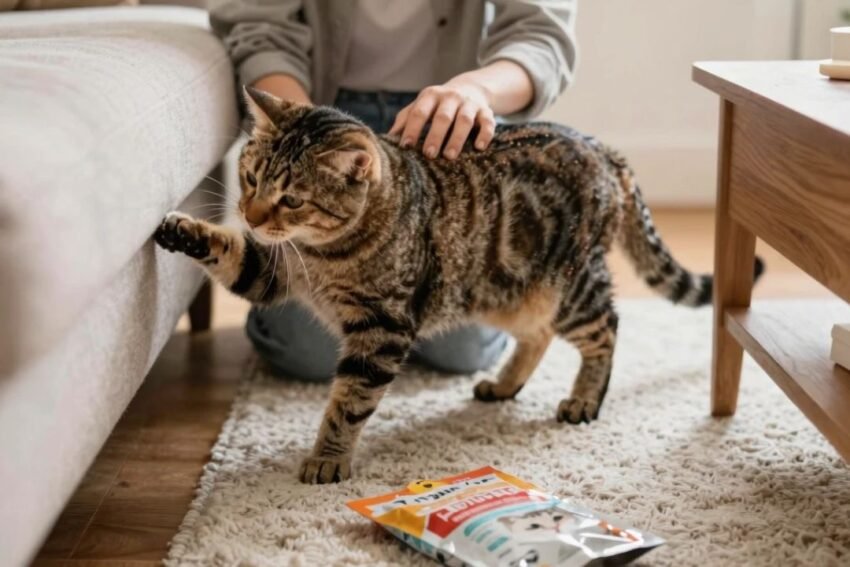
Scratching is one of the most common complaints among cat owners.
Cats scratch to:
- Maintain their claws
- Stretch their muscles
- Mark territory
- Release energy
- Express excitement
Trying to stop scratching completely is unrealistic.
Practical Solution
Provide several scratching posts or scratching surfaces.
Place them near furniture your cat already scratches.
Experiment with different materials, including:
- Cardboard
- Sisal
- Fabric
- Wood
Reward your cat whenever it uses an appropriate scratching surface.
If your cat scratches furniture, calmly redirect it to a scratching post instead of shouting or punishing it.
2. Biting During Play
Kittens and young cats often bite during play.
If owners allow cats to attack hands and feet as toys, the behavior can become a habit.
Practical Solution
Always use appropriate toys during interactive play.
Try:
- Wand toys
- Toy mice
- Balls
- Interactive toys
If your cat bites your hand during play, calmly stop the interaction and redirect it toward a toy.
Consistent responses can teach your cat that hands are not appropriate play targets.
3. Litter Box Problems
Litter box issues can be frustrating, but they should never be treated as simple disobedience.
Possible causes include:
- Dirty litter boxes
- Stress
- Changes in the home
- Litter preferences
- Poor litter box placement
- Competition between cats
- Medical problems
Practical Solution
Keep litter boxes clean and place them in quiet, accessible locations.
Consider providing multiple boxes in multi-cat households.
If a cat suddenly stops using the litter box, consult a veterinarian because urinary, digestive, pain-related, or other health issues may contribute to the change.
Never punish a cat for accidents.
4. Excessive Meowing
Cats use vocalization to communicate with humans.
Excessive meowing may be caused by:
- Hunger
- Attention seeking
- Boredom
- Stress
- Environmental changes
- Mating behavior
- Discomfort or illness
Practical Solution
First determine why your cat is vocalizing.
Make sure it has food, water, a clean litter box, exercise, and appropriate interaction.
If the cat is seeking attention, avoid immediately rewarding constant meowing with attention every time. Instead, reward calm and quiet behavior.
A sudden increase in vocalization should be discussed with a veterinarian.
5. Aggression Toward People
Aggression can be caused by fear, stress, territorial behavior, pain, overstimulation, or previous negative experiences.
Signs may include:
- Hissing
- Growling
- Swatting
- Biting
- Flattened ears
- Defensive body posture
Practical Solution
Give the cat space when it becomes frightened or aggressive.
Do not hit, shout at, or physically punish the cat.
Identify potential triggers and reduce exposure when possible.
If aggression is severe, unpredictable, or sudden, seek veterinary or professional behavioral guidance.
6. Aggression Between Cats
Cats may fight because of territorial issues, resource competition, fear, or poor introductions.
Problems can become worse when multiple cats compete for:
- Food
- Water
- Litter boxes
- Sleeping areas
- Human attention
- Territory
Practical Solution
Provide separate resources whenever possible.
Give each cat its own food and water area, resting spaces, and litter access.
If introducing a new cat, do so gradually rather than placing the animals together immediately.
Scent-based introductions and controlled visual contact can help cats adjust.
7. Jumping on Kitchen Counters
Cats naturally enjoy elevated places because height provides security and a good view of their surroundings.
Kitchen counters may also provide interesting smells and food opportunities.
Practical Solution
Instead of simply trying to prevent climbing, provide an acceptable alternative.
A cat tree, shelf, or elevated perch can satisfy the need to climb.
Keep food and tempting objects off counters.
Reward your cat for using its designated elevated space.
8. Excessive Hiding
Hiding is normal when cats feel uncertain or stressed.
A new cat may hide after entering an unfamiliar home.
However, excessive or sudden hiding can sometimes indicate fear, stress, or illness.
Practical Solution
Provide safe hiding places and allow your cat to come out voluntarily.
Do not repeatedly drag the cat out of its hiding spot.
If hiding continues unusually long or is accompanied by changes in appetite, activity, grooming, or litter box habits, contact a veterinarian.
9. Destructive Behavior
Cats may knock objects over, chew items, scratch furniture, or create messes when they are bored or seeking stimulation.
Practical Solution
Increase enrichment.
Provide:
- Interactive toys
- Puzzle feeders
- Scratching posts
- Cat trees
- Window perches
- Daily play sessions
Rotate toys regularly to maintain interest.
A more stimulating environment can reduce boredom-related behavior.
10. Chasing and Attacking Feet
Some cats chase moving feet because movement triggers their hunting instincts.
This can be especially common in kittens.
Practical Solution
Provide daily interactive hunting-style play.
Use toys that can be chased and captured.
Avoid encouraging your cat to chase people directly.
Redirect the behavior toward toys whenever possible.
11. Jumping on People
Some cats jump onto people for attention, food, or play.
Practical Solution
Teach your cat that calm behavior receives rewards.
If the cat jumps for attention, avoid immediately rewarding the behavior.
When all four paws are on the floor or the cat sits calmly, provide attention or a reward.
Consistency is essential.
12. Food Begging
Cats quickly learn which behaviors result in food.
Repeatedly feeding a cat whenever it begs can reinforce the behavior.
Practical Solution
Create a consistent feeding routine.
Avoid giving treats every time your cat demands food.
Use puzzle feeders or interactive feeding toys to provide mental stimulation.
If your cat suddenly becomes unusually hungry, discuss the change with a veterinarian.
13. Nighttime Activity
Cats may become active during the night because of their natural hunting instincts.
Indoor cats that sleep most of the day may have extra energy at night.
Practical Solution
Increase interactive play during the evening.
Provide appropriate toys and enrichment.
A consistent daytime and evening routine can help your cat adjust its activity pattern.
Avoid encouraging nighttime attention-seeking if possible.
14. Separation-Related Stress
Some cats become anxious when their owners leave the home.
Possible signs include:
- Excessive vocalization
- Destructive behavior
- Changes in litter box habits
- Excessive grooming
- Hiding
Practical Solution
Provide a predictable environment and enrichment while you are away.
Interactive toys, puzzle feeders, comfortable resting areas, and safe window views can help.
If anxiety is severe, consult a veterinarian or qualified animal behavior professional.
15. Fear of Visitors
Some cats hide whenever unfamiliar people enter the home.
This can be caused by temperament, limited socialization, or previous negative experiences.
Practical Solution
Never force your cat to interact with visitors.
Allow the cat to observe from a safe distance.
Visitors should avoid chasing or grabbing the cat.
Reward calm behavior with treats or play.
Over time, positive experiences can help reduce fear.
16. Fear of the Veterinarian
Many cats become stressed during veterinary visits.
The carrier, car ride, unfamiliar smells, and handling can all contribute.
Practical Solution
Start carrier training early.
Keep the carrier accessible at home and place comfortable bedding inside.
Reward your cat for entering voluntarily.
Short practice trips can also help your cat become more comfortable with travel.
Positive Reinforcement for Cat Behavior Training
Positive reinforcement is one of the most useful approaches to improving cat behavior.
When your cat performs a desirable behavior, reward it immediately.
Rewards can include:
- Small treats
- Praise
- Toys
- Petting
- Playtime
The reward should be delivered soon after the behavior so your cat can understand the connection.
Why Punishment Usually Does Not Work
Punishment can create fear without teaching the cat what it should do instead.
Shouting, hitting, chasing, or frightening a cat may lead to:
- Increased stress
- Avoidance
- Defensive aggression
- Reduced trust
- More unwanted behavior
Instead, redirect the behavior and reward an appropriate alternative.
Environmental Enrichment Is Essential
Many behavior problems can be reduced by improving the cat’s environment.
Provide opportunities for:
- Climbing
- Scratching
- Hiding
- Exploring
- Chasing
- Playing
- Watching outdoor activity
A cat tree, scratching post, puzzle feeder, and window perch can provide significant enrichment.
When a Behavior Change Requires a Veterinarian
Behavior changes should not always be treated as training problems.
Pain and illness can affect behavior.
Contact a veterinarian if you notice sudden changes such as:
- Aggression
- Loss of appetite
- Excessive hiding
- Litter box problems
- Excessive vocalization
- Sudden lethargy
- Changes in drinking or urination
- Unusual grooming
A medical evaluation can help rule out health-related causes.
Creating a Better Cat Training Routine
Consistency makes behavior training easier.
A simple daily routine can include:
Morning
Provide food, fresh water, litter box cleaning, and a short play session.
Afternoon
Offer enrichment through toys, puzzle feeders, or safe exploration.
Evening
Provide interactive play followed by feeding and quiet time.
Throughout the Day
Reward desirable behavior whenever you notice it.
Common Cat Training Mistakes
Avoid these mistakes when addressing behavior problems:
- Punishing the cat
- Expecting immediate results
- Ignoring natural instincts
- Providing too little exercise
- Using hands as toys
- Changing household rules frequently
- Ignoring health-related behavior changes
- Failing to provide scratching surfaces
- Not giving cats safe places to hide
Patience and consistency are much more effective.
Final Thoughts
Common cat behavior problems can often be improved when owners understand the reasons behind them. Scratching, biting, climbing, meowing, hiding, aggression, and litter box issues are not always signs of a badly behaved cat. Many are natural behaviors or responses to stress, boredom, environmental changes, or health problems.
The most effective approach is to identify the cause, provide appropriate alternatives, use positive reinforcement, and maintain a consistent routine.
Never rely on physical punishment or fear-based training. Instead, create an environment where your cat can safely express natural behaviors such as scratching, climbing, hunting, and exploring.
With patience, enrichment, proper cat behavior training, and veterinary support when necessary, many unwanted behaviors can be reduced or managed successfully. A better understanding of your cat’s needs can ultimately create a healthier, calmer, and stronger relationship between you and your pet.