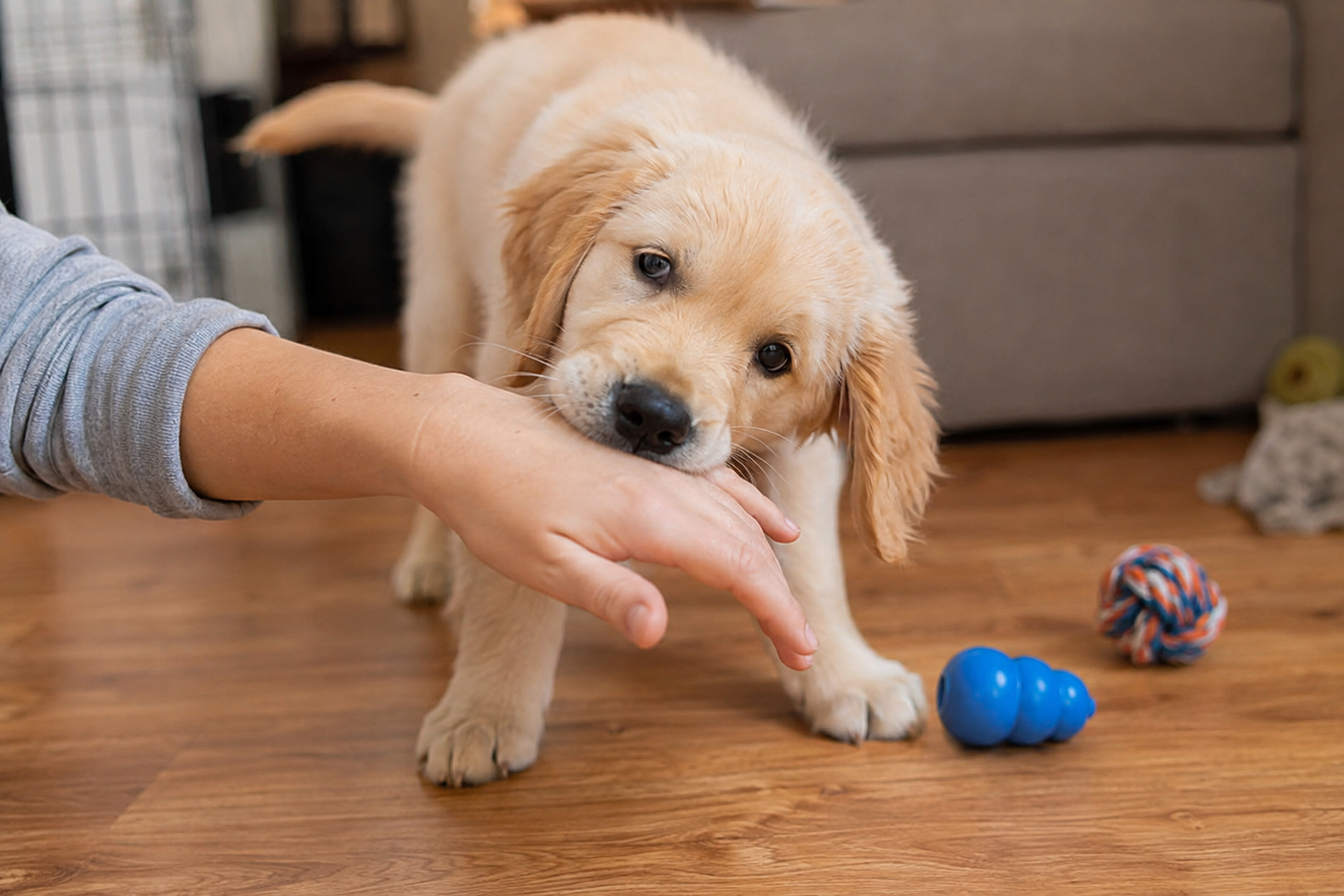
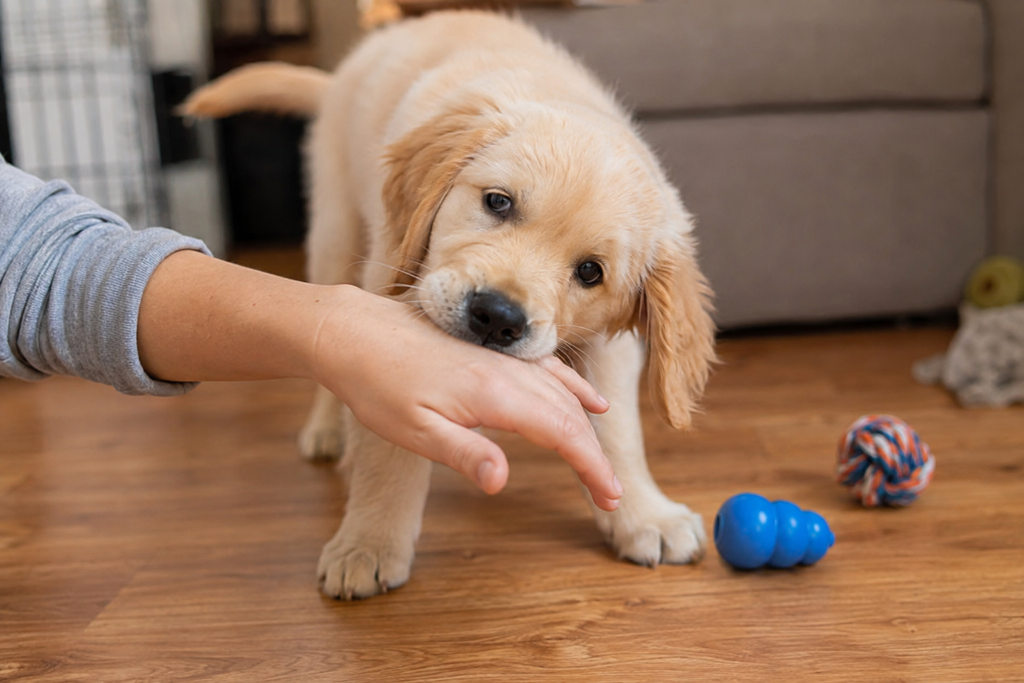
If you have recently brought home a young puppy, you have probably noticed one common behavior that surprises almost every new dog owner. Your puppy keeps biting your hands. Sometimes it feels playful, while other times it can be painful and frustrating. The good news is that puppy biting is completely normal. The better news is that you can teach your puppy to stop in a gentle and positive way.
In this guide, I will explain how to stop a puppy from biting hands using simple training methods that actually work. These techniques are easy for first time dog owners and will help your puppy learn good manners without fear or punishment.
Why Puppies Bite Hands
Before you try to stop the behavior, it helps to understand why puppies bite in the first place.
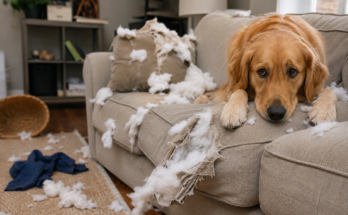
Puppies explore the world with their mouths just like human babies use their hands. They bite toys, furniture, shoes, and even your fingers because they are curious. Biting is also a natural part of playing with their littermates.
Another common reason is teething. Most puppies start losing their baby teeth between three and six months of age. During this stage, chewing helps relieve discomfort.
Sometimes puppies bite because they become too excited during play. They are not trying to hurt you. They simply have not learned how hard is too hard.
Knowing the reason behind the behavior makes it much easier to train your puppy with patience.
Stay Calm When Your Puppy Bites
The first rule is to stay calm.
Many people pull their hands away quickly or yell at the puppy. Unfortunately, this often makes the puppy even more excited because it turns into a fun game.
Instead, stop moving your hand and stay relaxed. If the bite is too hard, say “Ouch” in a calm voice and immediately end the play session for a short time.
This teaches your puppy that biting too hard makes the fun stop.
Redirect the Biting to a Toy
One of the easiest ways to stop hand biting is by giving your puppy something appropriate to chew.
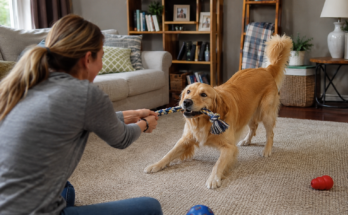
Keep a soft chew toy or rope toy nearby whenever you play together. The moment your puppy starts biting your hands, gently replace your hand with the toy.
When your puppy chews the toy instead, praise them warmly.
Over time, your puppy learns that toys are for biting while human hands are not.
Reward Gentle Behavior
Positive reinforcement is one of the most effective puppy training methods.
Whenever your puppy licks your hand, plays gently, or chooses a toy instead of biting, immediately reward that behavior.
You can use:
Small healthy treats
Verbal praise
Gentle petting
Extra playtime
Dogs repeat behaviors that earn rewards. By focusing on good behavior instead of only correcting bad behavior, training becomes much easier.
Avoid Rough Play
Many owners accidentally teach puppies to bite by playing rough games.
Wrestling with your hands or encouraging your puppy to chase your fingers can make biting seem acceptable.
Instead, choose games like:
Fetch
Hide and seek
Tug with proper dog toys
Puzzle toys
These games provide exercise without encouraging hand biting.
Give Your Puppy Enough Exercise
A tired puppy is usually a well behaved puppy.
Puppies have lots of energy, and if they do not get enough physical activity, they often release that energy through biting and chewing.
Take your puppy for age appropriate walks, short play sessions, and interactive games throughout the day.
Be careful not to overexercise young puppies because their joints are still developing.
Provide Mental Stimulation
Mental exercise is just as important as physical activity.
Puppies become bored very quickly. A bored puppy often looks for something interesting to chew, including your hands.
Keep your puppy busy with activities such as:
Food puzzle toys
Treat dispensing balls
Basic obedience training
Snuffle mats
Simple scent games
Just ten to fifteen minutes of mental stimulation can help reduce unwanted biting.
Teach the Leave It Command
Teaching basic commands gives you more control during everyday situations.
One of the best commands is “Leave it.”
Start by holding a treat in your closed hand.
When your puppy tries to lick or bite your hand, keep it closed.
The moment your puppy stops trying, reward them with a different treat from your other hand.
Repeat this exercise regularly until your puppy understands that leaving something alone earns a reward.
Eventually, you can use the command when your puppy goes for your hands.
Use Short Training Sessions
Puppies have short attention spans.
Instead of one long training session, practice several five minute sessions throughout the day.
This keeps your puppy interested while helping them learn faster.
Consistency matters much more than long training periods.
Socialize Your Puppy Properly
Proper socialization helps puppies develop better behavior.
When puppies safely interact with other vaccinated puppies, they learn bite inhibition naturally.
If one puppy bites too hard, the other usually stops playing.
This teaches valuable lessons that are difficult for humans to imitate.
Consider puppy training classes where your puppy can safely interact with others while learning basic commands.
Be Consistent With Family Members
Everyone in the home should follow the same rules.
If one person allows hand biting while another discourages it, your puppy becomes confused.
Agree on simple rules such as:
Never encourage biting hands
Always redirect to a toy
Reward calm behavior
Stop play after hard bites
Consistency speeds up learning and prevents mixed messages.
Avoid Physical Punishment
Some people believe that hitting a puppy or holding their mouth shut will stop biting.
This approach usually creates fear instead of trust.
Fear can damage your relationship and sometimes even increase aggressive behavior later.
Positive training builds confidence and teaches your puppy exactly what you want instead.
Patience always produces better long term results.
Manage Teething Pain
If your puppy is teething, offer safe chew toys that help soothe sore gums.
Rubber chew toys can be especially helpful.
Some toys can be chilled in the refrigerator before use, giving extra comfort to teething puppies.
Never give objects that could splinter or become choking hazards.
Providing proper chewing options naturally reduces the desire to bite hands.
Recognize Overexcitement
Many puppies become mouthy when they are overly excited.
Watch for signs such as:
Zooming around the house
Constant jumping
Ignoring commands
Barking excessively
Fast biting during play
When this happens, calmly end the game and give your puppy time to settle down before playing again.
This teaches emotional control over time.
Teach Gentle Touch
Encourage calm interactions every day.
Offer treats slowly from your fingers.
Reward your puppy for taking food gently.
If they grab too quickly, close your hand for a moment and try again.
This simple exercise teaches soft mouth behavior that carries over into play.
Create a Daily Routine
Dogs thrive on routine.
A predictable schedule reduces stress and unwanted behaviors.
Try to keep regular times for:
Meals
Walks
Training
Play
Rest
Nap time
A well rested puppy is usually much calmer than an overtired one.
Common Mistakes to Avoid
Many owners unknowingly make puppy biting worse.
Avoid these common mistakes:
Pulling your hands away quickly
Using your hands as toys
Punishing your puppy physically
Allowing biting sometimes but not always
Skipping daily exercise
Ignoring good behavior
Being inconsistent with training
Small changes in your approach can make a big difference.
When Should You Be Concerned?
Normal puppy biting becomes less frequent as training continues and your puppy matures.
However, you should seek professional help if your puppy:
Shows aggressive body language
Growls seriously while guarding toys
Bites without warning
Causes repeated injuries
Does not improve after consistent training
A certified dog trainer or veterinarian can identify any underlying issues and create a personalized training plan.
Frequently Asked Questions
At what age do puppies stop biting?
Most puppies naturally reduce biting between six and eight months of age, especially when they receive consistent training and proper socialization.
Is puppy biting normal?
Yes. Puppy biting is completely normal and is part of growing, teething, and learning how to interact with people.
Should I let my puppy chew my fingers?
No. Even gentle chewing teaches your puppy that hands are acceptable chew toys. Always redirect them to an appropriate toy.
Can treats help stop puppy biting?
Yes. Rewarding gentle behavior with treats encourages your puppy to repeat the correct behavior more often.
Final Thoughts
Learning how to stop a puppy from biting hands takes patience, consistency, and positive reinforcement. Remember that your puppy is not trying to be naughty. They are simply learning how to interact with the world around them.
Focus on redirecting biting toward toys, rewarding gentle behavior, providing enough exercise, and staying consistent every day. With time, your puppy will understand that hands are for petting, playing gently, and building trust instead of chewing.
Every puppy learns at a different pace, so do not become discouraged if progress feels slow. Keep your training sessions positive, celebrate small improvements, and enjoy the journey of raising a happy, well behaved companion. The effort you put in today will help your puppy grow into a friendly adult dog that knows exactly how to play safely with every member of the family.