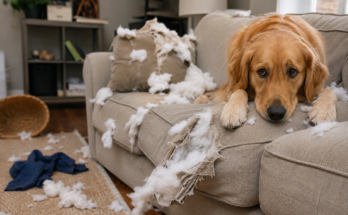
If you have an energetic dog, you already know that bad weather or a busy schedule does not reduce their energy. Many active dogs still want to run, play, and explore even when they have to stay inside. Without enough physical and mental activity, they can become bored and start chewing furniture, barking more than usual, or digging through things they should not touch.
The good news is that there are plenty of fun indoor games that keep your dog entertained while helping them burn energy. You do not need a huge house or expensive toys. With a little creativity, you can turn your living room into a fun playground that keeps your dog happy and healthy.
In this guide, I will share the best indoor games for active dogs, explain why they work, and give you practical tips to make indoor playtime more enjoyable.
Why Indoor Games Are Important for Active Dogs
Active dogs need more than a quick walk around the block. Breeds like Border Collies, Australian Shepherds, Labrador Retrievers, German Shepherds, Belgian Malinois, Jack Russell Terriers, and Huskies naturally have high energy levels.
When they cannot exercise outdoors, indoor games help by:
Keeping their minds active
Burning extra energy
Reducing boredom
Preventing destructive behavior
Strengthening your relationship
Building confidence
Even older dogs and puppies benefit from indoor activities because they provide healthy mental stimulation.
1. Hide and Seek
Hide and seek is one of my favorite indoor games because it is simple and exciting.
Tell your dog to stay while you hide somewhere in the house. Once you are hidden, call your dog’s name. They will use their nose and ears to find you.
When they find you, reward them with praise, treats, or a favorite toy.
This game improves listening skills while encouraging problem solving.
2. Treasure Hunt
Dogs naturally love using their noses.
Hide small treats around your home and encourage your dog to search for them. Start with easy hiding places and gradually make the challenge harder.
You can hide treats behind furniture, under cups, or inside safe boxes.
This activity provides excellent mental exercise and keeps dogs entertained for a long time.
3. Tug of War
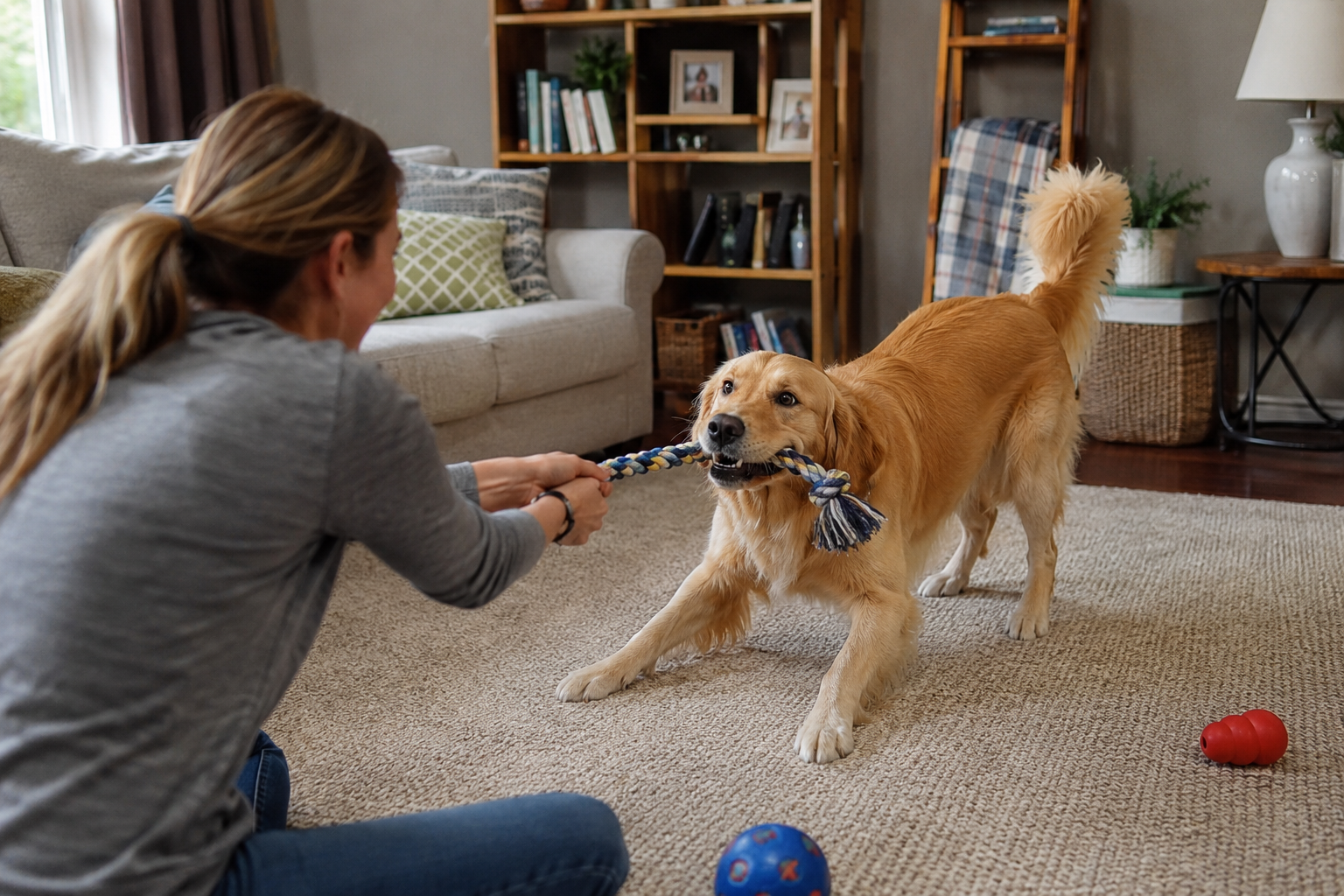
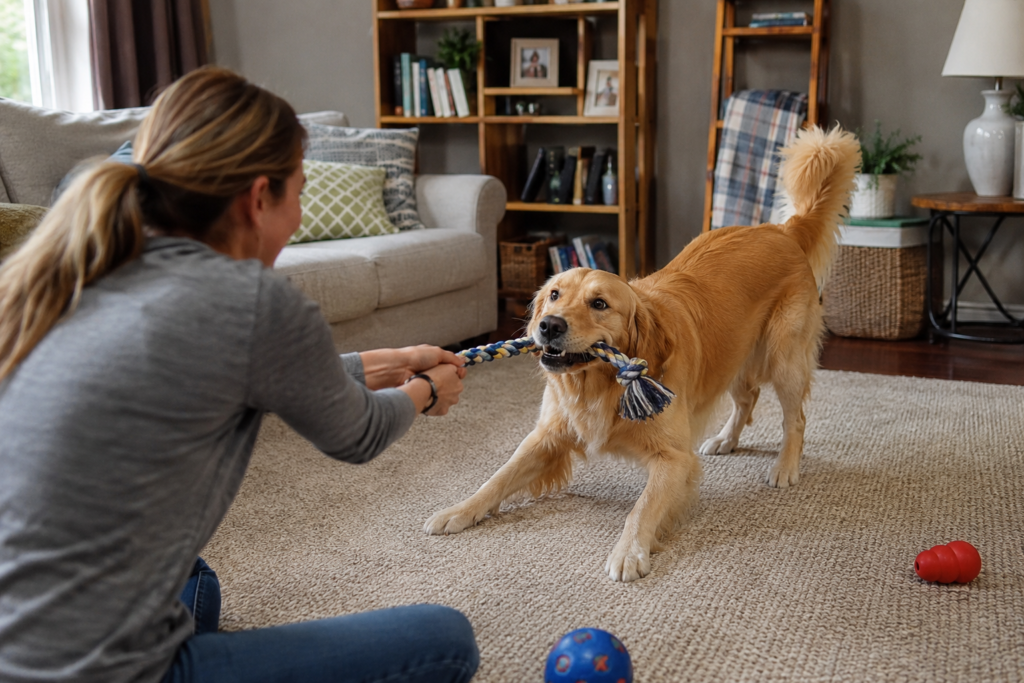
Many owners think tug of war makes dogs aggressive, but when played correctly, it is actually a healthy game.
Use a strong rope toy and teach your dog simple commands like “take it” and “drop it.”
Always stop the game if your dog becomes too excited.
Tug of war helps strengthen muscles while giving your dog a fun outlet for their energy.
4. Indoor Fetch
Fetch is not only for backyards.
If you have enough space, use a hallway or an open room. Replace hard balls with soft plush toys or lightweight rubber balls that will not damage furniture.
Throw the toy a short distance and encourage your dog to bring it back.
Indoor fetch is especially useful on rainy or snowy days.
5. Puzzle Toys
Puzzle toys challenge your dog’s brain while rewarding them with treats.
These toys require dogs to slide pieces, lift lids, or solve small puzzles before getting their reward.
Mental exercise can tire a dog almost as much as physical exercise.
A fifteen minute puzzle session often leaves active dogs relaxed afterward.
6. Obstacle Course
You can build an obstacle course using everyday household items.
Use pillows for jumping.
Place chairs to weave around.
Create tunnels with blankets.
Lay towels on the floor for balance practice.
Guide your dog through the course using treats and encouragement.
As they become more confident, make the course slightly more challenging.
7. Teach New Tricks
Training is one of the best indoor activities because it combines learning with fun.
Instead of repeating basic commands, teach exciting tricks like:
Spin
Roll over
Shake hands
High five
Bow
Put toys away
Ring a bell
Keep sessions short and reward every success.
Dogs love learning when training stays positive.
8. The Muffin Tin Game
This simple game requires a muffin tin, tennis balls, and treats.
Place treats inside several muffin cups.
Cover each cup with a tennis ball.
Your dog must figure out how to remove the balls to find the treats.
This activity encourages problem solving and keeps curious dogs busy.
9. Name the Toys
Many dogs can learn the names of different toys.
Start by introducing one toy at a time.
Repeat the toy’s name several times before rewarding your dog for touching it.
Once they learn multiple names, ask them to bring a specific toy.
This game improves memory and mental focus.
10. Shell Game
Take three cups and hide a treat under one of them.
Shuffle the cups slowly while your dog watches.
Encourage them to find the correct cup.
As your dog improves, increase the difficulty by moving the cups faster.
This game develops concentration and observation skills.
11. Stair Exercise
If your home has stairs and your dog is healthy enough, supervised stair exercise can help burn energy.
Throw a soft toy onto the stairs and let your dog retrieve it.
Keep sessions short to avoid joint strain.
Avoid this activity for young puppies, senior dogs, or dogs with joint problems.
12. Bubble Chasing
Many dogs absolutely love chasing bubbles.
Use dog friendly bubbles made specifically for pets.
Blow bubbles across the room and let your dog chase and pop them.
This game encourages movement while adding excitement to indoor play.
13. Scent Box Challenge
Fill several cardboard boxes with crumpled paper.
Hide treats inside only a few boxes.
Allow your dog to sniff each box until they discover the hidden rewards.
Dogs enjoy using their incredible sense of smell, making this one of the most rewarding indoor games.
14. Follow the Leader
Walk around your home while encouraging your dog to stay beside you.
Suddenly change directions, stop, or move around furniture.
Reward your dog for following your movements.
This activity improves attention and obedience while keeping your dog physically active.
15. Toy Cleanup Game
Teach your dog to place toys inside a basket.
Start by rewarding them for picking up a toy.
Next, reward them for dropping it into the basket.
Eventually your dog can help clean up after playtime.
This game combines exercise with useful training.
Tips for Safe Indoor Play
Safety should always come first.
Move fragile decorations before starting.
Choose soft toys that will not damage walls or furniture.
Keep floors free of slippery objects.
Provide fresh drinking water after active play.
Watch your dog for signs of tiredness.
Always supervise games involving treats or household objects.
How Long Should Indoor Play Last?
Every dog is different.
Small active breeds may enjoy several fifteen minute sessions throughout the day.
Medium and large breeds often benefit from thirty to sixty minutes of combined physical and mental activities.
Instead of one long session, I prefer multiple shorter games because they keep dogs engaged without overwhelming them.
Best Toys for Indoor Games
Choosing the right toys makes indoor play safer and more enjoyable.
Look for durable chew toys made from safe materials.
Soft plush toys work well for fetch.
Interactive treat dispensers keep dogs mentally busy.
Strong rope toys are perfect for tug games.
Puzzle feeders encourage problem solving while slowing down eating.
Rotate toys every few days so they continue feeling new and exciting.
Common Mistakes to Avoid
Many owners accidentally make indoor games less enjoyable.
Avoid using toys that are too small because they can become choking hazards.
Do not overfeed treats during training sessions.
Never force your dog to play if they seem tired or stressed.
Avoid rough games in tight spaces where your dog could slip or hit furniture.
Keep training positive and avoid punishment during playtime.
Final Thoughts
Finding the best indoor games for active dogs does not have to be difficult. Even simple activities like hide and seek, treasure hunts, puzzle toys, indoor fetch, and trick training can provide the exercise and mental stimulation energetic dogs need every day.
I have found that mixing different games throughout the week keeps dogs interested and prevents boredom. Some days they may enjoy solving puzzles, while other days they may prefer tug of war or chasing bubbles. The key is variety and consistency.
Remember that a happy dog is not just physically tired but mentally satisfied as well. Spending quality time together through fun indoor games strengthens your bond, improves behavior, and helps your dog stay healthy no matter what the weather is like outside. With a little imagination, your home can become the perfect place for your dog to learn, play, and enjoy every day.