If you are a pet owner, learning how to clean your pet’s ears safely at home is an important part of keeping your furry friend healthy. Clean ears help prevent infections, reduce discomfort, and allow you to notice potential health problems before they become serious. Many people avoid ear cleaning because they worry about hurting their pets, but with the right approach, the process is simple, safe, and stress free.
Whether you have a playful dog or a curious cat, regular ear care should become part of your grooming routine. You do not need professional skills to clean healthy ears. All you need is patience, the proper supplies, and a gentle touch.
This guide will show you everything you need to know about how to clean your pet’s ears safely at home, including when to clean them, what supplies to use, and what mistakes you should avoid.
Why Ear Cleaning Is Important for Pets
Your pet’s ears collect dirt, wax, dead skin, and tiny particles from the environment. If these build up over time, they can create the perfect place for bacteria and yeast to grow.
Regular ear cleaning helps keep the ears healthy by removing excess debris before it causes problems. It also gives you the chance to inspect your pet’s ears for redness, swelling, unusual discharge, or parasites like ear mites.
Healthy ears should look clean, light pink, and free from strong odors.
How Often Should You Clean Your Pet’s Ears
Not every pet needs weekly ear cleaning. The right schedule depends on your pet’s breed, lifestyle, and overall health.
Dogs with floppy ears usually need more frequent cleaning because less air reaches the ear canal. Dogs that love swimming may also need extra care since moisture can remain trapped inside their ears.
Cats generally need less frequent ear cleaning unless they have allergies, ear mites, or excessive wax buildup.
For most healthy pets, checking the ears once every week and cleaning only when needed is enough. Overcleaning may irritate the ears and remove the natural protective oils.
Supplies You Need Before Cleaning
Before you begin, gather everything in one place.
You will need:
A veterinarian approved ear cleaning solution
Cotton balls or soft gauze
Clean towel
Treats for rewarding your pet
Good lighting
Avoid using cotton swabs inside the ear canal. They can push wax deeper and increase the risk of injury.
Choose the Right Ear Cleaner
One of the most important steps in how to clean your pet’s ears safely at home is selecting the correct cleaning solution.
Use only products specifically made for dogs or cats. These cleaners are designed to dissolve wax while maintaining the proper balance inside the ear.
Never use alcohol, hydrogen peroxide, vinegar, or homemade mixtures unless your veterinarian specifically recommends them. These products may irritate sensitive skin and make existing problems worse.
Prepare Your Pet
Choose a quiet place where your pet feels relaxed.
Allow your pet to sniff the bottle and gently touch its ears before beginning. Speaking softly and offering treats throughout the process helps create a positive experience.
If your pet becomes anxious, do not force the cleaning. Take a short break and try again later.
Patience makes ear cleaning much easier over time.
Step by Step Guide to Cleaning Your Pet’s Ears
Follow these simple steps for safe ear cleaning.
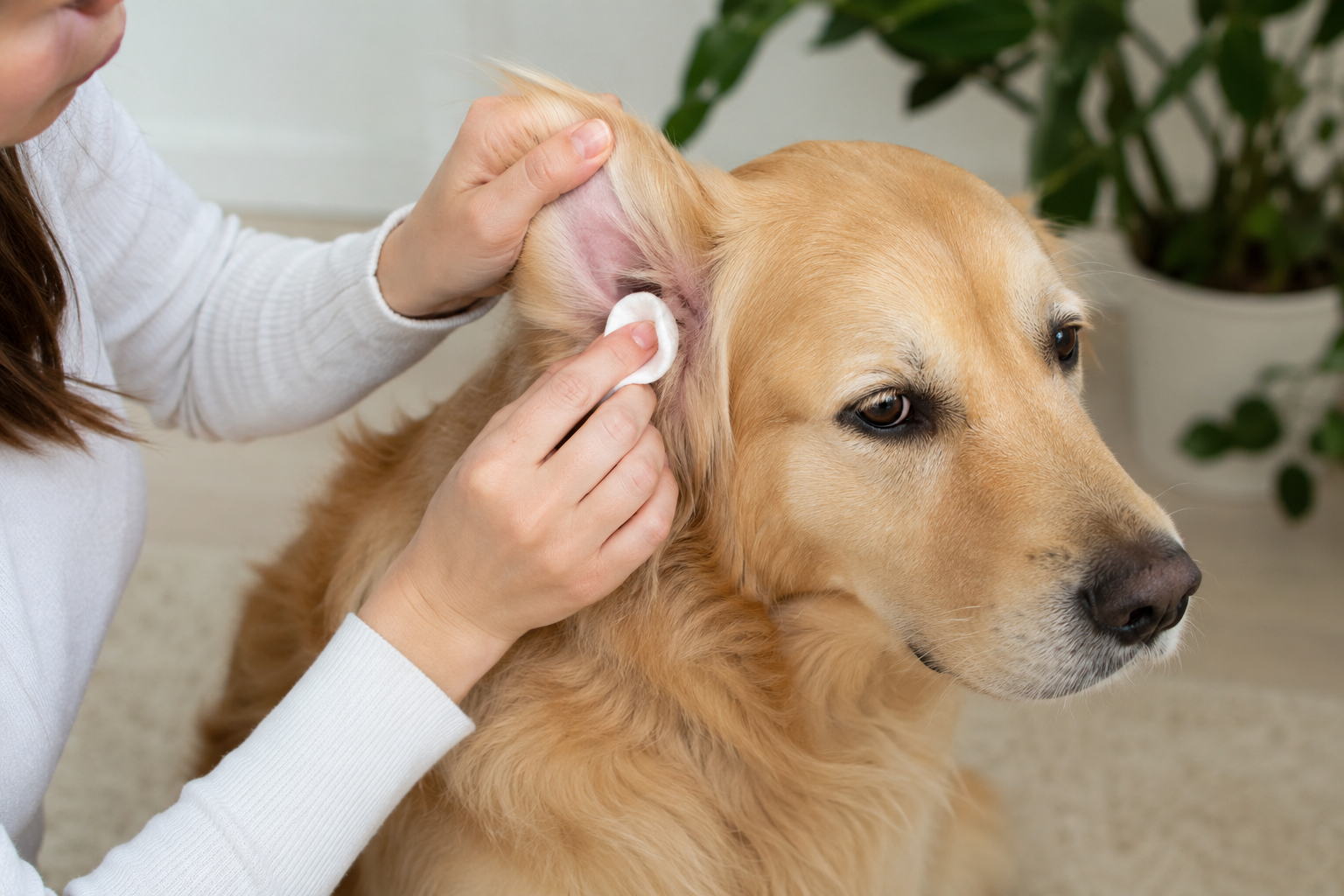
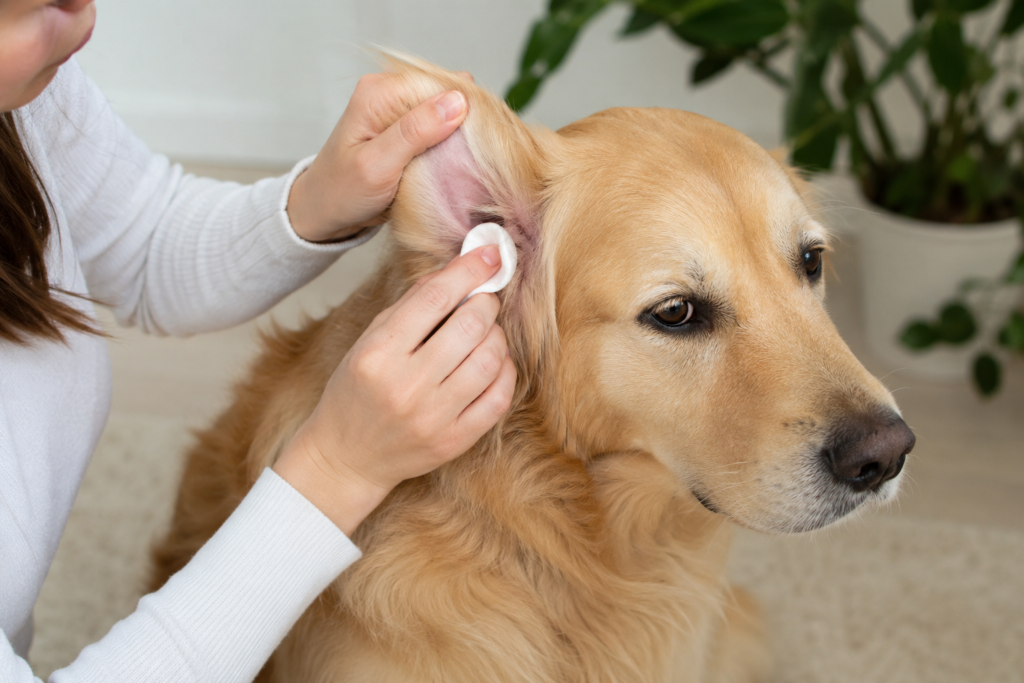
Lift the ear flap gently so you can see the ear canal.
Apply the recommended amount of ear cleaning solution according to the product instructions.
Massage the base of the ear for about thirty seconds. You should hear a soft squishing sound as the cleaner loosens wax and debris.
Allow your pet to shake its head. This helps move loosened dirt toward the outer part of the ear.
Use a clean cotton ball or soft gauze to wipe away the dirt you can easily see.
Repeat the same process on the other ear using fresh cotton if necessary.
Reward your pet with praise and a favorite treat once you finish.
What Healthy Ears Look Like
Knowing what normal ears look like helps you identify problems early.
Healthy ears are usually:
Light pink
Clean
Slightly shiny
Free from bad smells
Minimal wax
No swelling
No redness
No excessive scratching
If your pet’s ears match these signs, your routine ear care is working well.
Warning Signs You Should Never Ignore
Sometimes ear cleaning alone cannot solve the problem.
Contact your veterinarian if you notice any of the following:
Strong unpleasant odor
Dark brown or black discharge
Yellow or green fluid
Blood inside the ear
Swelling
Pain when touching the ears
Constant scratching
Head shaking that continues for several days
Loss of balance
These symptoms may indicate an infection, ear mites, allergies, or another medical condition that requires professional treatment.
Common Mistakes Pet Owners Make
Many well meaning pet owners accidentally make ear problems worse.
One common mistake is inserting cotton swabs deep into the ear canal. This often pushes debris further inside instead of removing it.
Another mistake is using water to rinse the ears. Moisture left inside creates an environment where bacteria and yeast grow quickly.
Some owners also clean too often. Healthy ears produce a natural amount of wax that protects the skin. Removing it too frequently may cause irritation.
Ignoring unusual odors or discharge is another serious mistake. Early treatment usually prevents bigger health problems later.
Special Care for Dogs
Dogs are more likely than cats to develop ear infections.
Breeds with floppy ears often trap moisture and heat inside the ear canal. Dogs with allergies also tend to produce more wax.
If your dog enjoys swimming, gently dry the outer ears after every swim. Moisture control is one of the best ways to reduce ear infections.
Long haired dogs may also benefit from regular grooming around the ears to improve airflow.
Special Care for Cats
Cats usually keep themselves clean through grooming.
However, indoor and outdoor cats can still develop ear problems caused by mites, allergies, or infections.
Never assume dark debris inside a cat’s ears is simply dirt. Coffee ground like material often points to ear mites, especially in kittens.
Cats can be more sensitive during ear cleaning, so move slowly and avoid sudden movements.
Can Puppies and Kittens Have Their Ears Cleaned
Yes, but extra care is needed.
Young pets have delicate ears that require gentle handling.
Introduce ear cleaning gradually so they become comfortable with the routine as they grow older.
Short positive sessions with treats help puppies and kittens develop trust and reduce fear during future grooming.
Tips to Make Ear Cleaning Easier
Keeping the experience positive benefits both you and your pet.
Clean the ears after exercise when your pet feels relaxed.
Offer treats before and after cleaning.
Use calm words throughout the process.
Stay patient if your pet needs breaks.
Keep each session short.
Regular gentle handling of the ears between cleanings also helps pets become comfortable with being touched.
Preventing Future Ear Problems
Preventing ear issues is much easier than treating infections.
Check your pet’s ears every week.
Keep ears dry after baths and swimming.
Use only veterinarian approved ear cleaners.
Maintain regular grooming.
Feed a balanced diet to support healthy skin and immune function.
Visit your veterinarian if you notice repeated ear infections, as they may be linked to allergies or other health conditions.
Frequently Asked Questions
Can I use baby wipes to clean my pet’s ears?
No. Baby wipes are not designed for the sensitive environment inside a pet’s ears. Use only ear cleaners made specifically for pets.
Is ear wax normal?
Yes. A small amount of light colored wax is completely normal and helps protect the ear canal.
What if my pet keeps shaking its head after cleaning?
A little head shaking immediately after cleaning is expected because the cleaning solution feels unusual. If head shaking continues for many hours or your pet seems uncomfortable, contact your veterinarian.
Can I clean infected ears at home?
No. If you suspect an ear infection, your pet should be examined by a veterinarian before any home treatment.
Final Thoughts
Knowing how to clean your pet’s ears safely at home is an essential skill for every responsible pet owner. Regular ear care helps prevent infections, reduces discomfort, and allows you to catch health problems early. By using a veterinarian approved ear cleaner, cleaning gently, and avoiding common mistakes, you can keep your pet’s ears healthy without causing stress or injury.
Remember that healthy ears do not always need frequent cleaning. Check them regularly, clean only when necessary, and never ignore signs like bad odors, discharge, swelling, or persistent scratching. With a consistent routine and plenty of patience, ear cleaning can become a quick and positive part of caring for your beloved pet.