
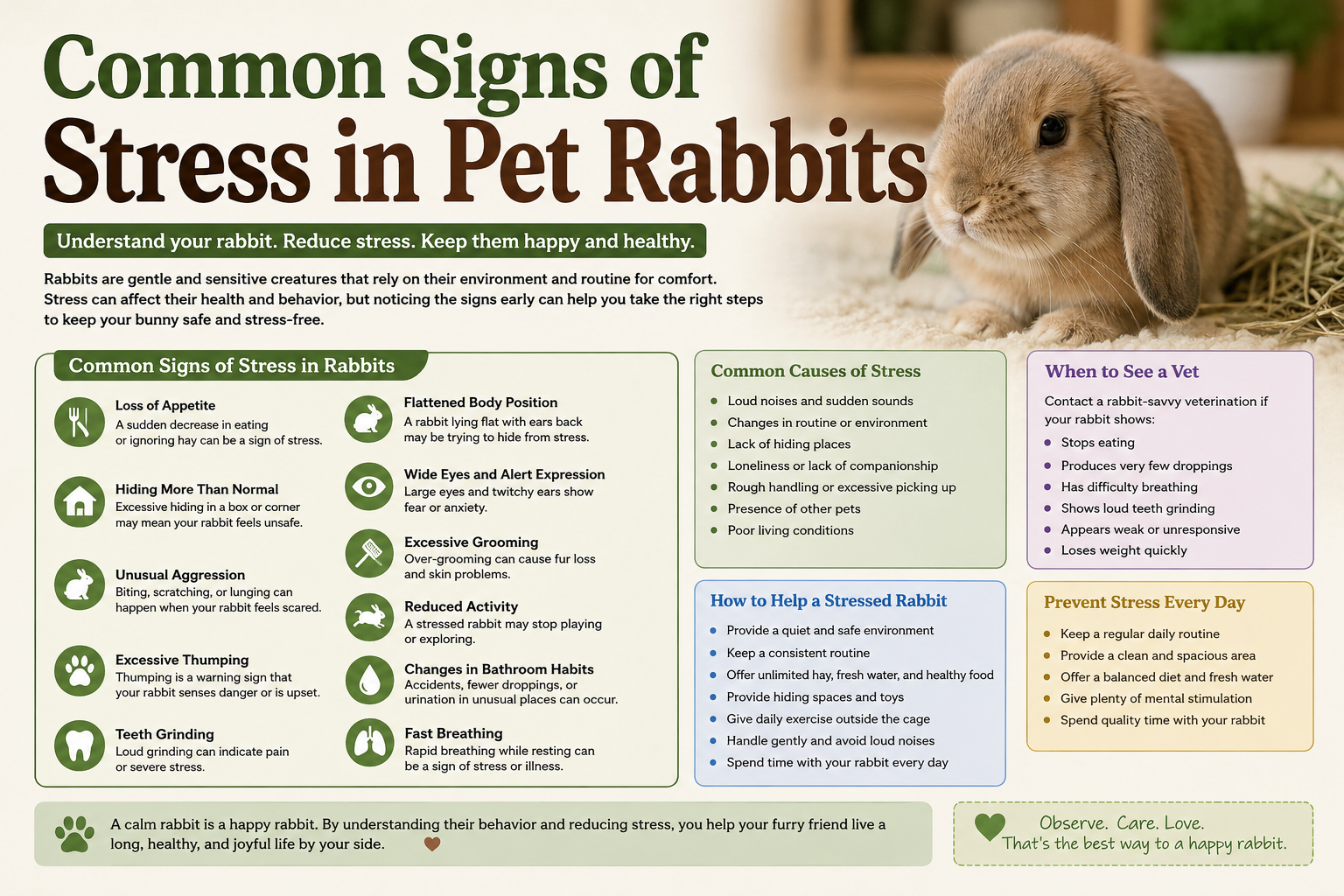
Pet rabbits are gentle, intelligent, and sensitive animals. They may not bark or meow to show how they feel, but they communicate through their body language and behavior. As a rabbit owner, understanding the common signs of stress in pet rabbits is one of the most important parts of keeping your furry friend healthy and happy.
Stress can affect a rabbit both physically and mentally. If ignored for too long, it can lead to serious health problems such as digestive issues, loss of appetite, weakened immunity, and even life threatening conditions like gastrointestinal stasis. The good news is that rabbits usually give clear signs when something is bothering them. Once you know what to look for, you can quickly identify the problem and make changes that help your rabbit feel safe again.
In this guide, I will explain the most common signs of stress in pet rabbits, the reasons behind rabbit stress, and practical ways to create a calm and comfortable environment.
Why Rabbits Get Stressed Easily
Rabbits are prey animals in the wild. Their survival depends on staying alert and reacting quickly to danger. Even though domestic rabbits live safely in our homes, they still have those natural instincts.
Things that seem normal to us can make a rabbit feel threatened. Loud noises, sudden movements, unfamiliar people, changes in routine, or even moving furniture can increase their anxiety.
Because rabbits naturally hide illness and weakness, many owners do not realize their pet is stressed until the behavior becomes obvious. Learning the early warning signs helps prevent bigger problems later.
Common Signs of Stress in Pet Rabbits
Loss of Appetite
One of the biggest warning signs is a rabbit that suddenly stops eating or eats much less than usual.
Healthy rabbits love hay and usually spend most of the day chewing. If your rabbit ignores its favorite food or leaves hay untouched, stress could be the reason.
A loss of appetite should never be ignored because rabbits need constant food movement through their digestive system. If your rabbit refuses food for several hours, contact a veterinarian immediately.
Hiding More Than Normal
Rabbits naturally enjoy resting in hiding spots, but excessive hiding often means they feel unsafe.
If your rabbit suddenly spends the entire day inside a tunnel, box, or hideout without coming out to explore, something may be causing stress.
Common reasons include
Poor cage placement
Loud household noises
New pets
Visitors in the home
Changes in routine
Unusual Aggression
A friendly rabbit may suddenly become aggressive when stressed.
You might notice
Biting
Lunging
Scratching
Growling
Charging toward people
This behavior is usually a sign of fear rather than anger. Rabbits often defend themselves when they feel trapped or threatened.
Avoid punishment because it usually increases anxiety. Instead, identify what is making your rabbit uncomfortable.
Excessive Thumping
Rabbit thumping is a powerful warning signal.
When rabbits stamp their back feet on the ground repeatedly, they are telling others that they sense danger.
Occasional thumping is normal, but frequent thumping without an obvious reason often indicates ongoing stress.
Pay attention to what happens before your rabbit starts thumping. You may discover a specific trigger.
Teeth Grinding
Not all teeth grinding means the same thing.
Soft, gentle tooth purring usually means a rabbit feels relaxed.
However, loud grinding often signals pain, discomfort, or severe stress.
If loud grinding is combined with sitting still, refusing food, or squinting eyes, seek veterinary care immediately.
Flattened Body Position
A relaxed rabbit stretches comfortably on the floor.
A stressed rabbit often presses its body close to the ground with ears flattened backward.
This posture shows your rabbit is trying to stay unnoticed because it feels unsafe.
Wide Eyes and Alert Expression
One of the easiest common signs of stress in pet rabbits is their facial expression.
A frightened rabbit may have
Wide open eyes
Large pupils
Rapid breathing
Ears constantly moving
These signs show the rabbit is scanning the environment for danger.
Excessive Grooming
Rabbits spend plenty of time grooming themselves every day.
However, excessive grooming can become a stress response.
Some rabbits repeatedly lick the same area until the fur becomes thin. Others may even pull out their own fur.
Stress related grooming should be addressed before it leads to skin problems.
Reduced Activity
Healthy rabbits are naturally curious.
If your rabbit suddenly stops exploring, hopping, or playing with toys, stress may be affecting its mood.
A rabbit that stays in one corner all day without moving much deserves careful observation.
Changes in Bathroom Habits
Stress often affects litter box behavior.
You may notice
Accidents outside the litter box
Smaller droppings
Fewer droppings
Urinating in unusual places
Digestive changes should always be monitored closely because they may become serious very quickly.
Fast Breathing
Rapid breathing without physical exercise is another warning sign.
A stressed rabbit may breathe faster while sitting completely still.
Heavy breathing can also indicate overheating or illness, so it should never be ignored.
Common Causes of Stress in Rabbits
Understanding the causes helps prevent future problems.
Loud Noises
Vacuum cleaners, fireworks, construction work, barking dogs, and loud music can frighten rabbits.
Try placing your rabbit’s enclosure in a quiet area of the house.
Sudden Changes
Rabbits enjoy predictable routines.
Changing feeding times, moving the cage, or introducing new furniture may temporarily increase stress.
Whenever possible, introduce changes gradually.
Lack of Hiding Places
Every rabbit needs a safe place where it can relax.
Simple cardboard boxes, wooden houses, or tunnels provide security and help reduce anxiety.
Loneliness
Rabbits are social animals.
Many rabbits enjoy companionship from another rabbit when introduced properly.
If your rabbit lives alone, spend quality time interacting with it every day.
Rough Handling
Picking up rabbits too often can make them nervous.
Since rabbits are prey animals, being lifted from the ground can feel like being caught by a predator.
Instead, sit on the floor and let your rabbit approach you naturally.
Other Pets
Dogs and cats may not intend to scare rabbits, but their presence alone can create stress.
Always supervise interactions and make sure your rabbit has a safe escape area.
Poor Living Conditions
Small cages, dirty bedding, poor ventilation, or lack of exercise all contribute to chronic stress.
A clean, spacious living area encourages natural behavior and improves overall wellbeing.
How to Help a Stressed Rabbit
If you notice the common signs of stress in pet rabbits, taking action early makes a big difference.
Create a peaceful environment where your rabbit feels secure.
Maintain a consistent feeding schedule.
Provide unlimited fresh hay and clean water.
Offer several hiding places throughout the enclosure.
Give your rabbit daily exercise outside the cage in a safe area.
Avoid loud sounds whenever possible.
Handle your rabbit gently and only when necessary.
Provide enrichment such as chew toys, tunnels, cardboard boxes, and puzzle feeders.
Spend quiet time sitting near your rabbit so it becomes more comfortable with your presence.
When to Visit a Veterinarian
Some stress symptoms are actually signs of illness.
Contact a rabbit experienced veterinarian if your rabbit
Stops eating
Produces very few droppings
Has difficulty breathing
Shows loud teeth grinding
Appears weak or unresponsive
Loses weight quickly
Early treatment can save your rabbit’s life, especially when digestive problems develop.
Preventing Stress Before It Starts
Prevention is always easier than treatment.
Keep your rabbit’s daily routine consistent.
Provide a balanced diet with unlimited grass hay, fresh water, leafy greens, and appropriate rabbit pellets.
Clean the enclosure regularly without making sudden major changes.
Allow your rabbit enough space to run, jump, and explore every day.
Respect your rabbit’s personality. Some rabbits enjoy being social, while others prefer more personal space.
Watching your rabbit daily helps you notice even small behavior changes before they become serious.
Final Thoughts
Recognizing the common signs of stress in pet rabbits is one of the best ways to protect your pet’s health. Rabbits cannot tell us when something is wrong, but they communicate through their actions every day. Changes in appetite, hiding, aggression, excessive grooming, fast breathing, or unusual body posture are all signals that deserve attention.
By providing a calm environment, maintaining a regular routine, offering plenty of enrichment, and responding quickly to unusual behavior, you can help your rabbit feel safe and secure. A relaxed rabbit is more playful, active, and affectionate, making life more enjoyable for both you and your furry companion.
The more time you spend observing your rabbit, the easier it becomes to understand its unique personality and recognize when something is not quite right. With patience, proper care, and attention, your rabbit can enjoy a long, healthy, and happy life.